When Your Payments Partner Holds Your Money
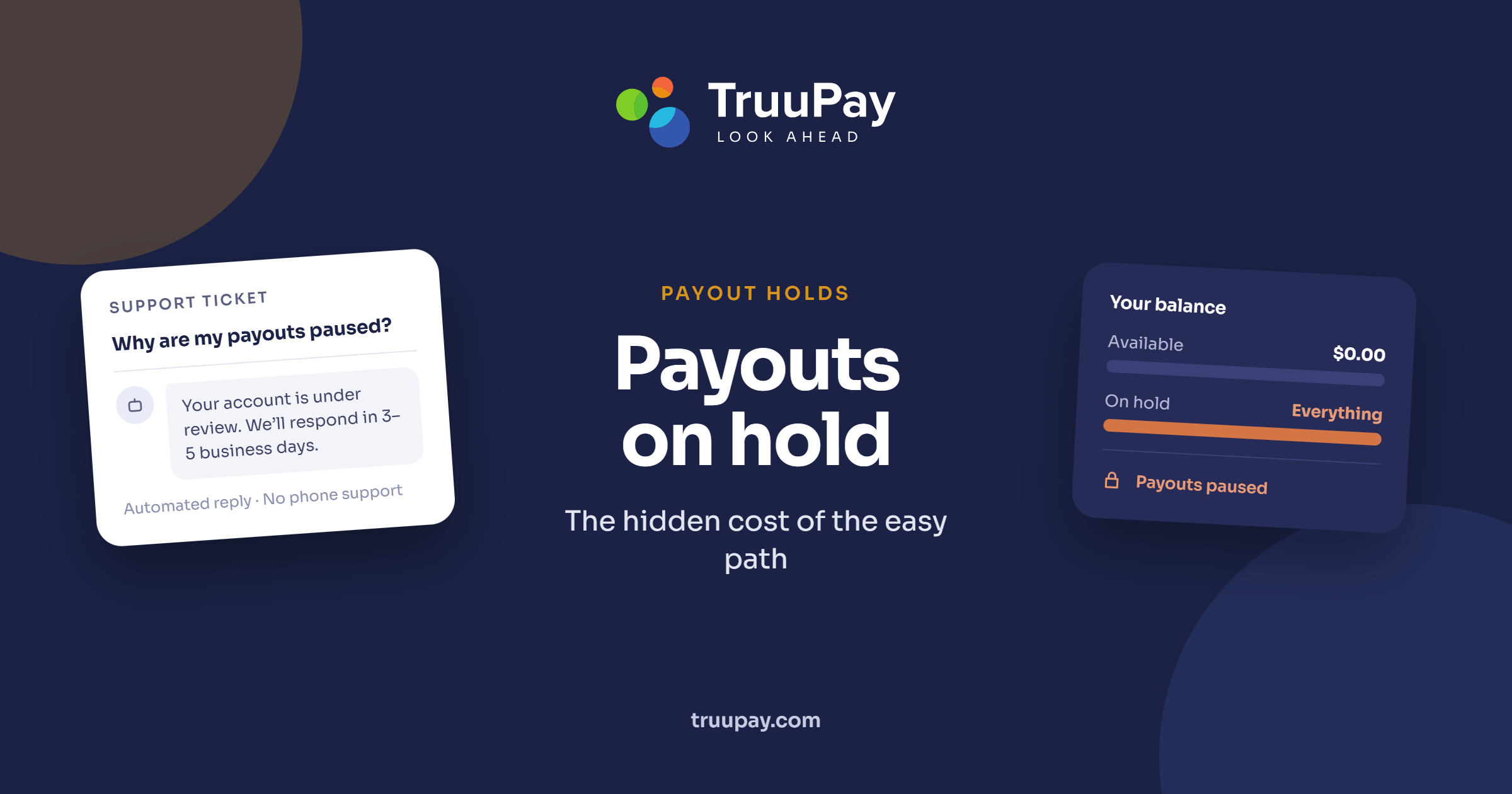
The Hidden Cost of the Easy Path
Picture a small business owner. Call her Maria. She sells handmade skincare products through her own online store, and for two years she has brought in a steady few thousand dollars a month. When she started, she signed up with one of the big-name payment platforms in about ten minutes. No paperwork, no phone calls, no questions. It felt like the smart, modern choice.
Then Maria cracks the marketing code. After months of testing, one of her ads takes off and a short video of her product starts circulating online. In a single week, she does more sales than in the previous six months combined. Orders pour in faster than she can make them, so she starts taking pre-orders. She buys ingredients and packaging in bulk, hires two part-time helpers, and waits for the funds to land.
They never do. Instead she gets an automated email: her account is under review and her payouts are on hold. She looks for a phone number and finds a help center. She submits a ticket and gets a canned reply. Days turn into weeks. Her suppliers want payment, her helpers want to be paid, and hundreds of new customers want their orders.
Maria's story is a composite, but versions of it play out every day. The payments provider that felt so easy at the start becomes the biggest obstacle to her growth, right at the moment it matters most.
Why the Easy Path Feels So Easy
The big-name payment platforms are built for speed. They let almost anyone start accepting cards in minutes. That convenience is real, but it comes from a trade-off most merchants never see.
Many of these platforms operate as aggregators. Instead of giving each business its own merchant account, they put thousands of businesses under one master account. To make sign-up instant, they skip most of the underwriting a bank would normally do up front.
The risk doesn't go away. It just gets postponed. Rather than understanding your business before you process your first sale, the platform watches your transactions after the fact. Its automated systems compare your activity to what they expect from a business like yours. When something looks different, the system acts first and asks questions later.
In other words, the underwriting still happens. It just happens at the worst possible time: when you're growing.
What Triggers a Hold
From the outside, a hold can feel random. It usually isn't. Automated risk systems are looking for changes, and success often looks exactly like risk. Common triggers include:
- A sudden jump in volume. Your business goes viral, lands a wholesale account, or has a record holiday season. To an algorithm, a spike can look like fraud.
- One unusually large sale. A $2,000 order from a store whose average sale is $40 stands out immediately.
- Payment for future delivery. Deposits, pre-orders, custom work, and event tickets mean the customer pays now and receives later. That gap creates chargeback risk, so it draws extra scrutiny.
- A rise in refunds or chargebacks. Even a handful of disputes can push a small account over a threshold.
- A business model the platform didn't expect. If you signed up as one type of business and your sales start to look like another, the system flags the mismatch.
When a flag goes up, the platform has several options. It can delay your payouts, hold a percentage of every sale in a reserve, freeze your full balance, or close the account outright. Often the merchant isn't told which rule was triggered or what it will take to fix it.
The Real Cost of Frozen Funds
A hold isn't just an inconvenience. For a growing business, it can be the difference between a breakthrough and a breakdown.
First, you can't fulfill orders. The money from the sale is the money you need to buy materials, pay staff, and ship the product. Without it, you either borrow at a bad rate or tell your best new customer you can't deliver.
Second, your cash flow seizes up. Holds and rolling reserves can last weeks or months. Meanwhile, rent, payroll, and supplier invoices keep coming.
Third, there's no one to talk to. Platforms built for self-service are rarely built for conversation. When your livelihood is on the line, a ticket number and an automated email are not much comfort.
Finally, the worst case is termination. A closed account can leave you scrambling to find a new provider in the middle of your busiest season. In some cases, a terminated merchant can also find it harder to get approved elsewhere.
The cruel irony is that these problems hit hardest at the moment a business is succeeding.
How Banks Actually Look at Your Business
Every card payment ultimately runs through a sponsor bank. That bank is responsible for the merchants it supports, so it wants to understand what each business does and how much risk it carries.
When a bank underwrites a merchant properly, it looks at a few core things:
- What you sell and how you deliver it. Selling coffee over the counter carries different risk than selling products online on pre-order with a three-week ship date.
- Your expected volume and ticket size. What's a normal month? What's your largest likely sale?
- Your processing history. Past statements show how you've performed, including refunds and chargebacks.
- Your business stability. How long you've operated and how your finances look.
Here's the key point: banks don't object to growth. They object to surprises. A sales surge from a winning ad campaign isn't a problem when the bank knows it's coming and understands why. The same surge becomes a red flag when it shows up with no context.
That's why the relationship matters. A merchant with someone in their corner, someone who has set the right expectations and can explain what's happening, is in a very different position from a merchant who is just one account among millions.
How TruuPay Does It Differently
At TruuPay, we believe your payments partner should help you grow, not stand in your way. We understand how banks evaluate businesses, and we use that knowledge to work for you.
- We get it right from the start. We take time up front to understand your business, your sales cycle, and where you're headed. Your account is set up to match how you actually operate, so normal activity doesn't look suspicious.
- We plan for your growth. Expecting a big order, a seasonal rush, or a new product line? Tell us. We can work with the bank ahead of time so your success doesn't trigger an alarm.
- We advocate for you. TruuPay works with multiple sponsor banks. If questions come up, we don't leave you to sort it out alone. We explain your business, provide context, and push for a resolution.
- You talk to real people. When something needs attention, you reach someone who knows your account, not a help center article.
We can't promise that no bank will ever ask a question. That's part of how the system protects everyone. What we can promise is that you'll have a partner who understands the process and stands beside you through it.
How to Protect Your Business From Holds
Whoever you process with, these steps will lower your risk of a frozen account:
- Describe your business accurately at sign-up. Include how you deliver, your typical sale size, and your realistic monthly volume.
- Give notice before big changes. A large order, a promotion, or a new product line should be shared with your provider before the money starts moving.
- Keep documentation ready. Invoices, contracts, and proof of delivery help resolve questions fast.
- Watch your refunds and chargebacks. Clear policies and responsive customer service keep disputes low.
- Ask how holds are handled before you sign. Who do you call? How fast do they respond? Will someone advocate for you with the bank?
If your current provider can't give clear answers to that last question, it's worth finding one that can.
Choose a Partner Built for Your Best Day
The easy path is easy right up until it isn't. The real test of a payments provider isn't how fast you can sign up. It's what happens on your best day, when sales finally take off and you need your money to keep your promises.
Maria didn't choose the wrong business. She chose the wrong partner. You don't have to make the same mistake.
If you're ready for a payments partner that understands your business and advocates for your growth, let's talk. Reach the TruuPay team at info@truupay.com, call 866-941-3806, or visit truupay.com.
Featured Articles


Popular Articles

Dedicated Solutions for Hard-to-Place Merchants
We specialize in bespoke solutions for hard-to-place merchants, offering tailored support and fast approvals. Our team ensures you have the secure, efficient payment processes needed to succeed.

Streamlined Payment Solutions for ISOs & ISVs
As a reseller, you work hard to secure the right providers to reduce your clients’ risks. We make your job easier by accepting all payments under one roof, so that you have more free time to grow your business.
Related Blog Articles
Get the Latest from TruuPay
Sign up for email updates and receive expert insights, industry trends, and exclusive updates!